
Lumivane GPU Store · Jongno-gu, Seoul
GPU shopping questions, answered
These are the questions we get most often at the Jongno-gu store, answered without hedging. If your situation is not covered, the contact page is the faster route.
Compatibility and fit
Case clearance is the first thing to check, in millimeters. Dual-fan cards fit compact Korean cases; triple-fan cards often need more room. Check card length, slot width, and power cable routing before buying anything. Bring your case model and we will check it with you.
Two more things decide whether a card physically works: the thickness of its cooler across two or three slots, and the total board height so the power connectors are not pressed against the side panel. Bring the case, or its model number, and we measure against the exact card you want.
What to check before you buy
Card length
Compare to your case limit
Slot width
Two or three slots
Power cables
Route before you seat it
In-store check
Bring the case model
VRAM and performance
8GB handles current 1080p gaming. 1440p with high textures in newer titles pushes against 8GB. 12GB is a comfortable 1440p baseline and 16GB gives you headroom for future titles and creator work. The RTX 5060 Ti 8GB is the card where this tradeoff is most visible, because a 16GB version exists.
Texture packs, ray-traced reflections, and mod packs all reserve memory before frames are drawn. When memory runs short, the driver streams assets from your storage instead, which shows up as stutter rather than a lower frame rate. That is why the useful question is not just how much memory a card has, but whether the games you actually play ask for more than it holds at your resolution.
Reading by target
Warranty coverage
Cards sold here carry the manufacturer's standard warranty, which varies by brand and by AIB partner. We will tell you the specific term for the specific card before you buy, including whether it is handled through the manufacturer or through us. Keep your receipt, since warranty claims need it.
What varies by card
Term length and who processes the claim, since partner brands set their own coverage.
What we confirm first
The exact term for the exact model, before any payment is taken.
What you keep
The receipt and the original box, both requested on most claims.
Coverage that is not included
Physical damage and cards modified after purchase fall outside standard terms.
Full manufacturer terms are printed with the card and can be confirmed at the counter before you leave with a purchase.
Jongno-gu pickup
Pickup at the Seoul store
We are at 12, Saeun-ro, Jongno-gu, Seoul, 03157. Pickup is in person, and you can pay by card at the counter. If you want to confirm a specific card is in stock before traveling, call +82-2-2268-1234 or send an inquiry through the contact page.
Store address
12, Saeun-ro, Jongno-gu
Postal code & city
03157 Seoul
Counter hours
Mon–Fri 09:00–18:00
Phone
+82-2-2268-1234
Payment at pickup
Card at the counter
Before you travel
Confirm stock by phone
Returns and exchanges
Returns are handled under Korean consumer protections and the manufacturer's policy for the specific card. Sealed, unopened cards follow one process; opened and installed cards follow another. Ask before you buy if the return window matters for your build timeline, and we will give you the exact terms.
Sealed, unopened cards
The box and its factory seal are intact and the card was never seated in a slot. Keep the invoice together with the box, since the checkout staff will ask for both. If the seal is broken, the return is assessed under the second process rather than this one.
Opened and installed cards
Once a card has been installed, the assessment runs through the manufacturer's policy and any fault needs to be described clearly at the counter. Bring the card, the receipt, and whatever cable or adapter you used, so we can check the failure the same way a service desk would.
Return windows and handling steps differ by brand and by the specific partner card. If a build deadline depends on it, ask at the counter before payment and we will write down the terms that apply to your card.
Triple-fan cards in small cases
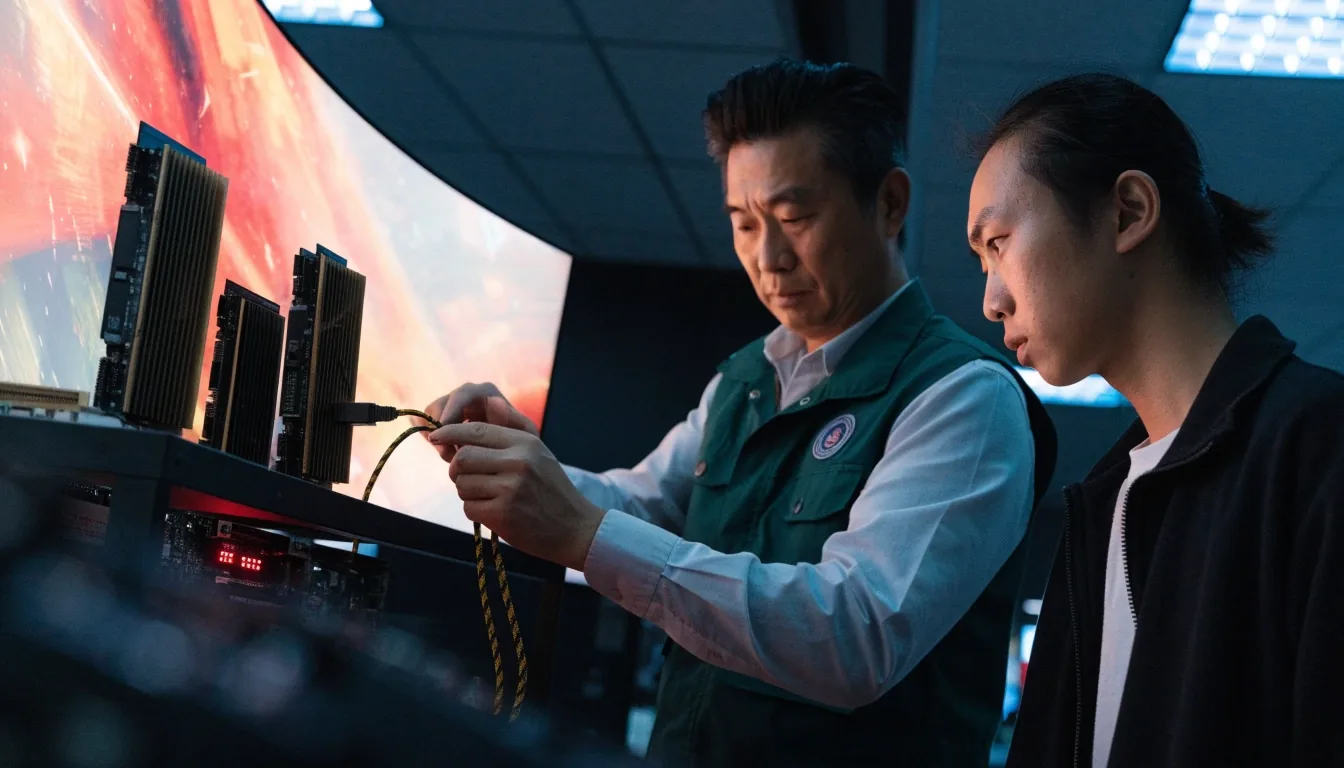
Triple-fan coolers run quieter and hold higher sustained clocks, but they need case length to fit. If your case is compact, a dual-fan card like the MSI RTX 5060 Ti VENTUS 2X PLUS OC is usually the better fit. Forcing a large cooler into a small case hurts airflow more than it helps cooling.
The rule of thumb: measure the clearance from the back of the case to the front intake, then subtract the space cables need. A card that fits with a few millimeters left over still has to feed cool air to its fans. If there is no gap in front of the cooler, temperatures climb even though the fit looks fine on paper.
Dual fan
Built for tight clearances
Shorter boards fit compact cases, and two fans keep noise predictable in a smaller volume of air. Quieter across a normal evening of play without demanding extra room.
Triple fan
Sustains higher clocks
Longer coolers spread heat and hold boost clocks longer, which is worth it in a mid-tower where there is room for the card and air in front of it.
Compare GPUs side by side if you are weighing a compact card against a larger one at a similar price. Our staff will check the physical fit against your case model at the counter, so the length question is settled before you buy.
Creator workflows and RTX Spark
If you edit video, render 3D, or run local AI models, VRAM and CUDA matter more than gaming benchmarks. NVIDIA has been extending the RTX platform into creator workflows, and RTX Spark appeared in its 2026 COMPUTEX announcements as part of that positioning. Tell us the workload and we will point you to the right card.
Video timelines, 3D scenes, and local model caches all consume memory before they consume compute, and they keep it reserved for longer than a game does. If your projects regularly work in 4K timelines or larger scene files, the memory number on the spec sheet matters more than a frame-rate chart. Bring the project size and the tools you use, and the recommendation changes with the workload rather than the price tag.
What to tell the counter
- The editing or 3D tool you work in, and the version.
- The size of a typical project or scene, not just the longest one.
- Whether you also game on the same machine, and at which resolution.
- Your case model, so the fit check happens in the same visit.
Shorter questions we also hear
Answers to the smaller questions that come up most often across the counter, so you can plan before traveling.
Can I pair a newer card with an older power supply? Open
Check the total system power and, more importantly, the connectors your supply actually provides. A card that needs a newer connector type may need a supplied adapter, and an older supply running near its limit will not enjoy a sudden load step. Bring the supply model number and we will check it against the card you want.
Does a G-SYNC display change which card I should choose? Open
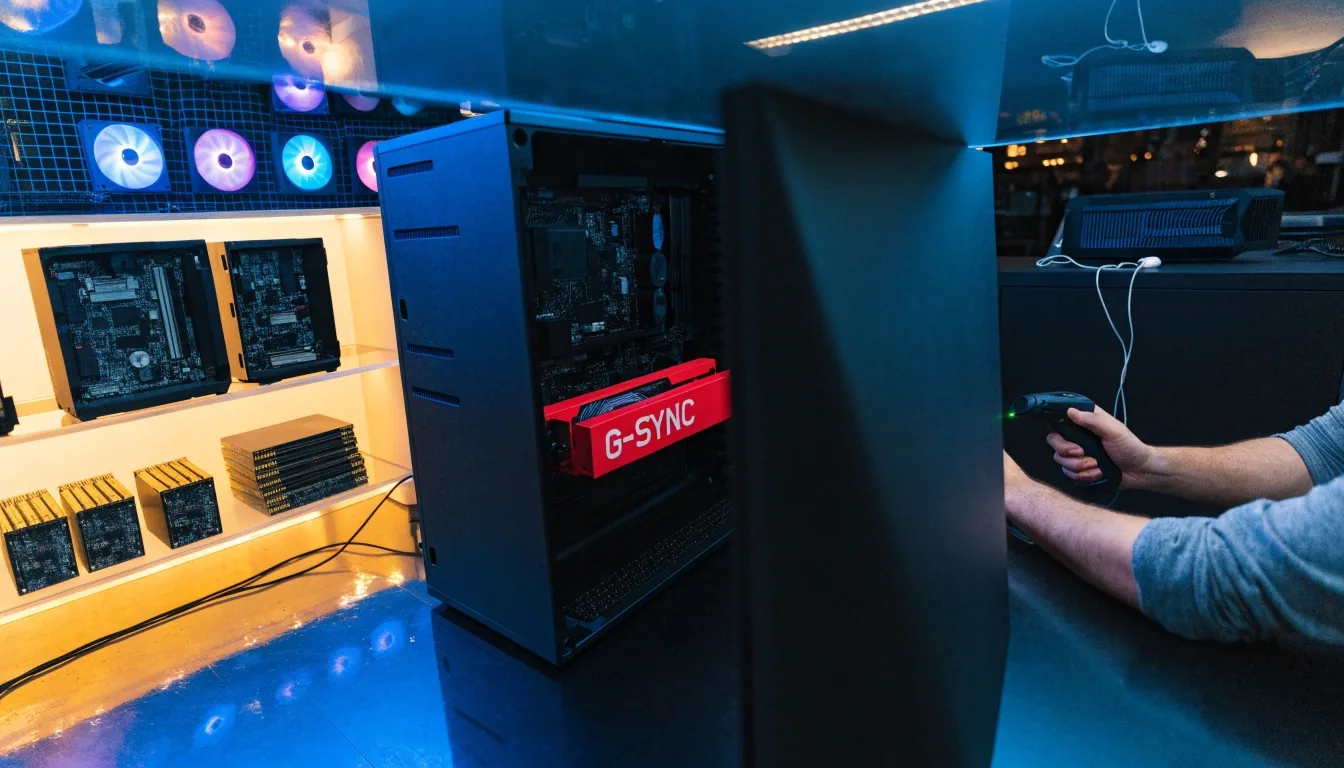
The RTX line supports variable refresh on G-SYNC displays, so a card from that family keeps the feature working. What changes with the display is the resolution you drive, and that is what should pick the memory size. A 1440p or ultrawide screen is where the 12GB and 16GB options start to earn their price.
Can I reserve a card and pick it up later? Open
Tell us the model and the day you can come in, and we will confirm availability before you travel. Pickup happens at the counter at 12, Saeun-ro in Jongno-gu, and payment is by card when you collect the card in person.
Will a heavier card need a support bracket? Open
Longer coolers put more load on the slot and the case's mounting points. Many builders add a support bracket for peace of mind, especially when the case sits upright for years. We can show you what fits when you collect the card.
Do the prices change often? Open
Graphics card prices move with supply, and the figure you see in the catalog is what applies at the counter on the day you buy. Our price insight page tracks how figures shift across the Korean market so you can see whether the current number looks ordinary or stretched.
Still deciding?
If your question is not answered here, the contact page is the fastest route to a person. Bring your case model, your power supply, and the resolution you play at, and we can work through the fit and the warranty terms in one visit.