Lumivane GPU Store Lumivane GPU Store · Seoul
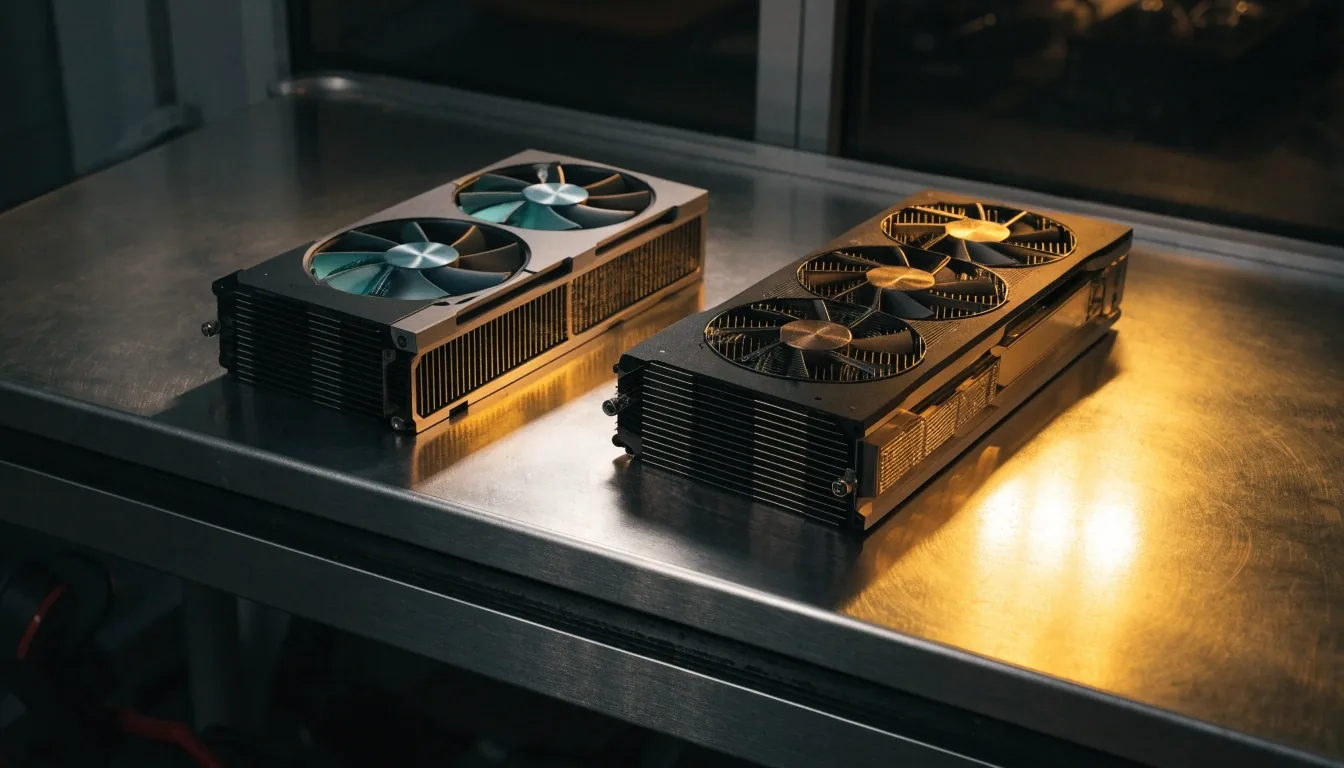
Two graphics cards side by side on a workbench under warm lamp light

The tier gap

RTX 5070 vs 5060 Ti

The 5070 sits a tier above the 5060 Ti and is built for 1440p at high settings. The 5060 Ti is a 1080p card that handles 1440p with settings dialed back. The performance gap is consistent across games. The price gap has been less consistent, which is the part that complicates the decision for Korean buyers.

Target resolution 1440p / 1080p
Settings at 1440p high / dialed back
Price gap less consistent

A steady performance step and an unsteady price step is why the two cards keep landing in the same conversation here.

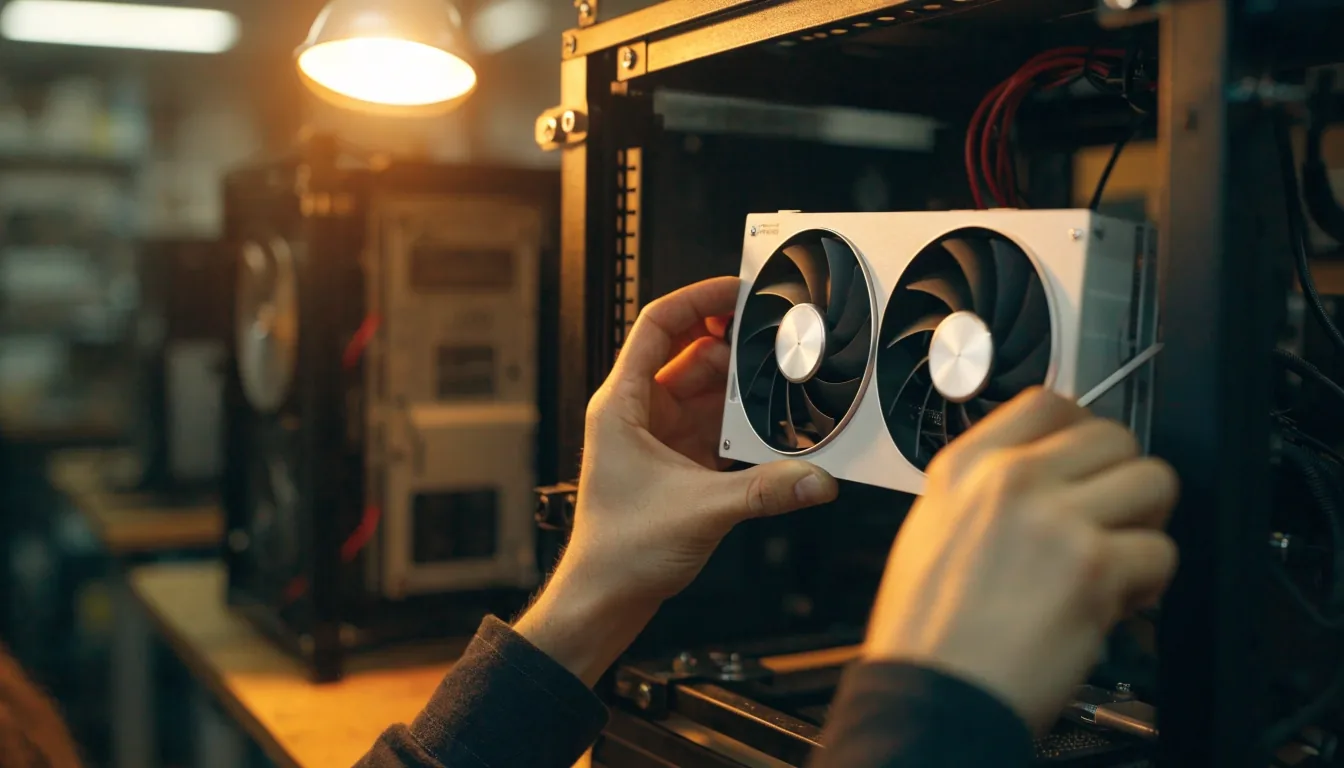
Three-fan graphics card cooler on a workbench under warm lamp light

Same GPU, different memory

RTX 5060 Ti 8GB vs 16GB

Same GPU, different memory, and that is the entire comparison. The rest of the card does not change: same cooler options, same power delivery, same partner designs. What changes is how long it keeps up as textures grow.

8GB: keeps up until it does not

At 1080p with moderate settings, the 8GB version keeps up. At 1440p with high textures in newer titles, it starts hitting a ceiling the 16GB version does not — the same GPU, stopped by memory rather than by its core. If you plan to keep the card for several years and expect texture packs to keep growing, that ceiling is the thing to think about, not the launch-day frame rate.

Ceiling reached 1440p

16GB: the one that keeps going

High textures at 1440p stay comfortable, and the card ages better as engines ask for more video memory. You are paying for headroom you cannot add later.

Ages better
The 8GB card was named in Korean reports as one of the models hit by price increases, moving from ₩472,500 → ₩706,120
in one tracked listing. That increase narrows the price gap to the 16GB version, which changes the math on the cheaper card. Price pressure on 8GB

RX 9070 XT vs RTX 5070

The RX 9070 XT is AMD's high-end answer and the key alternative in the current Korean GPU conversation. It uses GDDR6 rather than GDDR7, which is why it has been less affected by the RTX 50 price pressure. The RTX 5070 gives you DLSS and NVIDIA's stronger ray tracing. Pick based on which of those you actually use.

RTX 5070

Memory type GDDR7
Upscaling DLSS
Ray tracing stronger

The pick when ray tracing and DLSS frame generation are part of how you play, and when the current listing price still fits.

RX 9070 XT

Memory type GDDR6
Upscaling AMD FSR
Rasterization charts well

The pick when most of your library runs without ray tracing and you want the most rasterized performance per won at the current price.

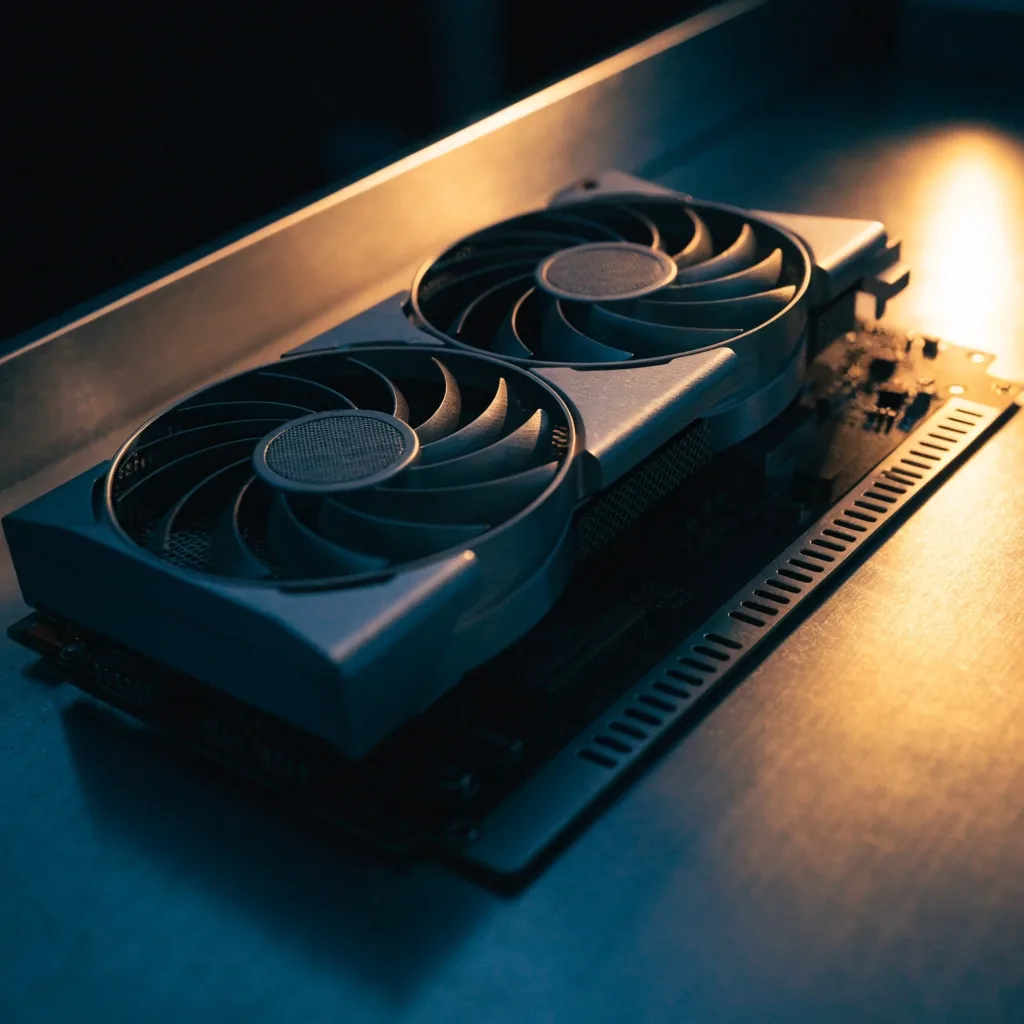
Dual-fan graphics card on a bench under warm lamp light

Ray tracing and DLSS in practice

Feature set against price

DLSS is NVIDIA's upscaling and frame generation technology, and it is the single biggest practical difference between the two brands for gaming. Ray tracing performance also favors NVIDIA in most titles. AMD counters with rasterization performance per won.

Competitive shooters, high refresh rasterization first
Single-player with ray tracing on DLSS and RTX
Most titles, no ray tracing AMD per won
DLSS The one lever that changes which card people should buy here.

Thermals in a Korean apartment

Sustained performance depends on the cooler and the room. A triple-fan card in a case with two intake fans will hold higher clocks longer than a dual-fan card in a closed enclosure.

The dual-fan MSI RTX 5060 Ti VENTUS 2X PLUS OC is designed for compact builds, and it is a good card, but it will not match a large triple-fan cooler under a long load. Size and cooling are a package deal — the card you can fit is part of the card you get.

Triple-fan card, two intake fans, airflow around the shroud Holds higher clocks
Dual-fan card in a closed enclosure Cools less under long load
MSI RTX 5060 Ti VENTUS 2X PLUS OC Sized for compact builds

Measure the case before you measure the clock speed. Cooler design is what you live with daily.

Value, measured against live Korean prices

Value in this market is a moving target. Danawa tracks RTX 50 listings across Korean retailers, and the same card can appear at several prices on one day. Compare current listings before you commit, not last month's numbers — a card that looked affordable in spring can be priced differently this week.

If a price looks unusually low, check the seller and the warranty terms before paying. The condition of the box is not the condition of the card.

See price movement in Korea
Tracked listing

Dual-fan MSI 5060 Ti VENTUS, moved in a short period.

₩740,860 → ₩1,109,280

RTX 5070 listings cited around

₩1,100,000

Prices move weekly

We quote from current listings at the desk, not from a shelf label.

What separates a top pick from an average one

Two cards can share a GPU and differ completely in practice. Cooler quality, fan noise under load, power delivery, and physical dimensions are what separate the better partner cards from the rest. Our advice is to read the cooler design before the clock speed, because that is what you live with daily.

Cooler design and fan noise under load The first thing to read on any listing.
Power delivery and board quality Matters more the longer you keep the card.
Physical dimensions Include the shroud in your case measurements.
Boost clock printed on the box Last on the list, not first.

Which comparison fits your build

1440p with NVIDIA features

RTX 5070 against the 5060 Ti 16GB is your decision. The tier gap is real, and the memory headroom is what carries you past the next texture-heavy round of releases.

Price-sensitive, mostly rasterized

RX 9070 XT against the RTX 5070 is the one. If you rarely switch ray tracing on, the AMD card's per-won position is what should drive the purchase.

1080p, budget-limited

The RTX 5060 Ti 8GB question is mostly about how long you plan to keep the card. Short-term, it is fine at 1080p. Multi-year, the 16GB version is the safer seat.

Should I buy the 8GB 5060 Ti to save the difference?

If your monitor is 1080p and you keep textures at moderate settings, the 8GB card does the job. The trade is future headroom: high textures at 1440p and newer titles are where you would feel the difference. We usually ask how long you plan to keep the card before answering this one.

Which matters more, DLSS or ray tracing?

They usually travel together. DLSS upscaling and frame generation give you smoother output in more games, and ray tracing is a setting you switch on per title. If you play mostly rasterized games, the AMD card's rasterization per won is the more relevant number.

Will a dual-fan card really be a problem?

In a case with decent airflow it is fine, and it is the right choice for small enclosures. Across a long session in a closed box, a large triple-fan cooler will hold higher clocks. Fit and airflow decide the answer more than the fan count alone.

Can I reserve a card for pickup?

Call or message the store with the model you want. If it is on the shelf, we will hold it for you to collect at 12, Saeun-ro, Jongno-gu, Seoul — Mon–Fri, 09:00–18:00 — and you can look at both cards together before deciding.